Showing posts with label Lord's Supper. Show all posts

Tuesday, November 10, 2015

Positive Acts - Gathered Together to Break Bread


This post is a continuation of my series Positive Acts.

Why does the church get together? Is it for "worship," as much of the American church believes today? No, it is not. Rather, the bible tells us that the body of Christ comes together for edification. I Corinthians 14:26 says, "What then, brothers? When you come together, each one has a hymn, a lesson, a revelation, a tongue, or an interpretation. Let all things be done for building up" (ESV).

One key method the church uses to bring about mutual edification is the Lord's Supper. I'm not referring to the typical funeral-like ceremony held by institutional churches. Rather, I'm talking about what we see in scripture: a joyful and full meal in which the church family has a great time. In Acts 20 this is what we see in Troas.

Paul was passing through town. He got together with his friends. They were meeting that night for a specific purpose. Luke writes in 20:7, "On the first day of the week, when we were gathered together to break bread, Paul talked with them, intending to depart on the next day, and he prolonged his speech until midnight." They gathered to break bread. As they ate together, Paul talked with them. He likely told them all about the many things God was doing through him and his companions while they were traveling about Asia and Greece.

God wants his people to gather. He also wants them to gather for the right reason. Worship is a 24/7 exercise. The church comes together not specifically for worship, but for edification. One primary means of edification is the Lord's Supper.

If we do not know why God wants his body to gather, then how can we ever accomplish what our Lord desires through our meetings?

Sunday, August 2, 2015

Unavoidable: the Importance of Eating


I'm going to end this series on an enjoyable topic: eating. Almost everybody likes to eat.

Eating was very important to the life of the early church. When they gathered they often shared a full meal together: the Lord's Supper. I'm referring to a literal complete meal, not a ritual ceremony with tiny glass of juice and tasteless cracker.

In Acts 2:42 we read, "And they devoted themselves to the apostles' teaching and the fellowship, to the breaking of bread and the prayers." The breaking of bread describes a full meal Lord's Supper.

Later in Acts (20:7) we see this, "On the first day of the week, when we were gathered together to break bread, Paul talked with them, intending to depart on the next day, and he prolonged his speech until midnight." This verse actually gives a purpose statement for why they got together (at least on that occasion): to break bread. They met to eat.

Why is eating important to church gatherings? Four reasons come to mind. In no particular order:

1. Eating keeps the atmosphere informal.

2. Eating meets a basic need (nutrition).

3. Eating keeps everyone equal.

4. Eating is enjoyable.


Sharing the Lord's Supper together as a full meal is a wonderful experience. I hope it is something that you get to do frequently. Not only is it a great time, but it is also an unavoidable principle provided to us in scripture.

Wednesday, July 8, 2015

Questions and Answers

I've been gradually answering a series of questions that I raised back in May in the post entitled Sorry, But I Can't Stop Asking Questions. We've made it to July, and I'm still answering them. This is dragging on too long. Therefore, I'm going to finish the final six questions right now.

Why do so many simple church folks have poorly-defined doctrine?

Having swum in the simple church waters for a while now, I realize that a significant number of these Christians have fairly poor or at least poorly-defined doctrine. I'm referring to significant issues such as the gospel itself (obviously the most important), the reality of Hell, homosexuality, women's roles, etc. Why has this happened? While I'm sure many different reasons exist, the primary one may be that many simple church people tend to "go it alone" when coming to their own beliefs. They pick and choose whatever they feel comfortable with, not bothering to compare those beliefs to historic Christianity. I'm all for studying the scriptures to find what is true; however, this ought to be done in primarily in community as opposed to isolation.

One further thought: plenty of institutional Christians have poor doctrine. This stems from drinking the Kool-Aid of bad teaching from the pulpit. Denomination after denomination in this country has stated beliefs and practices that have little to nothing to do with the bible. Just take a quick look, for example, at the Episcopalian Church. They hardly resemble Christianity at all.

The truth is that poor doctrine exists everywhere. We must let the bible drive what we believe and come to those beliefs within the setting that is the body of Christ.

Why do churches spend so much money on themselves?

This is an easy one to answer. The institutionalized church has one great, often unstated goal: self-preservation. This is why it spends almost all of its tithes and offerings on paying its own bills. After paying the pastoral salaries and building expenses there is little left over to give to anyone in need. An additional factor is that American Christians like comfort; the buildings must be nice.

Why do churches deny any Christians access to the Lord's table?

I believe this is done with good but ignorant intentions. It also occurs not within the New Testament's model of a full meal, but rather during the ceremonial Lord's Suppers that feel like funerals.

Some pastors are afraid that non-believers will partake of the small cup of juice and the stale cracker. Therefore, they only allow "local church members" to eat it. In doing so, they are denying access to the table. What a mockery this is! Who is the pastor to deny access to the Lord's table to any believer? It is the Lord's after all.

Within institutional Christianity the entire Lord's Supper has become a big mess. It does not even remotely resemble the joyful family meals we read about in the New Testament. It needs an entire reformation.

Why do many Christians invest so much in secular politics?

The answer is that many believe that the USA is some sort of second Israel. "God is going to change the world through the red, white, and blue!" Wrong! God has never made any promises to America. Also, these Christians simply do not understand (or refuse to) that the church should function outside of politics. The church is a spiritual reality. It operates according to God's principles. To mesh with politics always brings harm and disappointment to the church.

Why do we divide over so many inconsequential issues?

We divide because we want to be right. We do not believe that we can stand united with other Christians who believe differently than we do on doctrines of secondary importance. Division is the easy thing to do; it's a much more challenging task to live peaceably with those who disagree with us. Also, we don't take God's commands for unity seriously; we act as if they are optional.

Why do we expect secularists to care about Christian principles?

I'm always amused when I hear Christians bemoan the state of our society. I cannot figure out why Christians think that a secular culture would care at all about what God has to say about anything. Frankly, what amazes me is that the USA is not worse off morally and ethically than it is. The fact is that man's heart is cold to the things of God until God works the miracle of regeneration. We ought to expect a lot less from society and a lot more from the church. The church alone can see with spiritual eyes. We alone should be caring for what God wants. We tend to hold society to too high a standard while we give the church a free pass. The church ought to be the beacon God intends it to be. Let's hold each other to a higher standard.

Friday, June 12, 2015

Why Is the Lord's Supper More Often Like a Funeral Than a Celebration?

Almost all of us have been through it before: the institutional Lord's Supper / Communion / Eucharist.

We know how it goes. Most of the folks sit somberly in pews. One person in the front leads a ceremony that feels like a funeral. Everybody is instructed to focus upon their sins and upon Christ's death. No one except the leader speaks. Everyone eats a small cracker or bite of bread. Everybody sips wine or juice. No fun is had.

The above, with small variations, occurs in almost all churches in the USA throughout the year. This would be fine if it was based in scripture. The problem is that it is not. Nothing like what I've described exists in the bible, especially not in the New Testament. If you search the New Covenant people to see what their Lord's Suppers looked like, you will find large family celebrations with full meals. Now that sounds like fun.

So how did we get to this point? Why would the church trade in a family celebration for a funeral-like ceremony?

(This post stems from an earlier piece entitled Sorry, But I Can't Stop Asking Questions.)

To answer these questions we must turn back the clock of church history.

As with much that is wrong with the church, the Constantinian change played a large role. When Emperor Constantine made Christianity the preferred religion of the Roman Empire (in the early 300's A.D.), many pagans flocked into the church institution. They brought their pagan sacrifices with them. In order to keep some semblance of these practices in place, the Mass was developed. Thus we have the "re-sacrificing of Christ" each time the Mass takes place.

In order for a sacrifice to happen, a priest has to be involved. Additionally, the people present must be somber in nature. After all, you cannot celebrate when someone is being sacrificed. The Roman church knew that the bread and wine had to be involved; therefore, they kept them as part of the sacrifice.

When the Reformers came along they did some things to change this. They got rid of the Mass and the priest. However, they put the sermon and the pastor in those spots. Additionally, they kept the funeral-like atmosphere. Ugh. They did not do what they should have: reverted back to the family celebrations we read about in the New Testament.

When we realize that church history and not scripture has led to the current situation, we see what we must do. Scripture must trump tradition. Family celebrations it is!

Friday, November 14, 2014

Church Simply: A Real Lord's Supper


Confession time: I love to eat. Food is excellent. It is best served with good company.

Simple church gatherings almost always involve eating of some kind. Many of these meals are real Lord's Suppers. I'm referring to an actual meal that celebrates what Christ has accomplished for us on the cross. We see this in various places in the New Testament. For example, in Acts 20:7 we read, "On the first day of the week, when we were gathered together to break bread, Paul talked with them, intending to depart on the next day, and he prolonged his speech until midnight." Please notice that the body gathered for a specific purpose: "...when we were gathered together to break bread..."

Earlier in Acts, we see that the early believers dedicated themselves to several things, one of these being the "breaking of bread" (2:42).

The Corinthian church was struggling with the Lord's Supper. Some in the body were abusing it. The wording of chapter 11 only makes sense in the context of an actual meal. Paul does not tell them to stop eating a meal; rather, he instructs them in how to eat it properly.

Many institutional churches are starving themselves. The Lord's Supper celebration has been changed into a Lord's Snack funeral-like ceremony. This is a sad deviation for the worse.

One of the best aspects of gathering with other believers is eating together. There is something about eating together that brings about community life. It is easy to have conversations when sitting around the table. The body comes together as it all shares food together. Part of this meal, although I don't think it is required, is the bread and the cup. The eating and drinking of these helps remind us of what Jesus has done and also fosters the unity of the body.

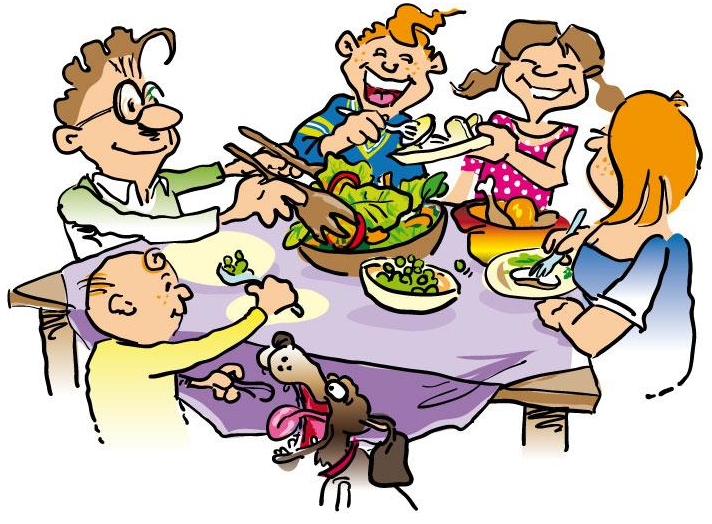
I love the above icon because it shows a real meal in action. People are happy. There's even a dog at the table. The meal is portrayed as an active, joyful occasion. This is what the Lord's Supper should be.

When the church gathers, one thing we should all be thinking is, "Let's eat!" And by "eat," we are referring to a real supper.

Sunday, March 31, 2013

The Lord's Dessert


On Friday night we gathered with about twenty other believers. Some friends of ours decided to simply invite other Christians over to their home. Although I was tired from working about sixty hours this week, our family decided to go anyway. It sounded like too much of a good time to pass up.

The simplicity of the meeting was wonderful. After hanging out for a bit, we all crammed into the living room/dining room areas. We then spent some time looking through several different biblical passages that focus on the Passover. After reading and discussing the OT foreshadowing and the NT fulfillment in Jesus Christ, we partook of the Lord's Dessert.

I refer to it as the "Lord's Dessert" because we didn't eat a full meal together. We had all eaten something prior to arriving, so at this gathering we had bread, juice and/or wine, and various desserts. It was sweet both literally and figuratively. I think I had some coconut creme pie, a brownie, and a cookie. While we ate, we again just sat around and talked about life. The ages ranged from about five to sixty-five.

The key in this, of course, is not the type of food consumed or even the food at all. The beautiful aspect is the body of Christ coming together and edifying one another. It didn't take much planning or effort. It only required brothers and sisters meeting to share life.

Edification is not the ultimate purpose of the Christian's life. Worship is. However, edification leads to worship. Therefore, its great significance.

I hope you have regular opportunities to get together with other Christians to celebrate the Lord's Supper in a variety of ways.

Monday, April 2, 2012

Acts 20:7 and the First Day of the Week

“On the first day of the week, when we were gathered together to break bread, Paul talked with them, intending to depart on the next day, and he prolonged his speech until midnight.” Acts 20:7 

The context of the above familiar verse is Paul’s third missionary journey. Paul and his companions have arrived in Troas, where they stayed for seven days. 

In 20:7-12 we read about a gathering of the church in Troas. We’re told that they came together on the first day of the week (Sunday). The gathering was for the purpose of sharing the Lord’s Supper meal together. During this occasion, Paul talked with them for quite a while.

What we see here is a church coming together to eat together. Paul was in town, and they wanted to spend a lot of time with him. They ate, talked, ate, and talked. Eventually someone fell asleep, fell, died, and was raised. That makes for quite a memorable evening together no doubt. I love the fact that after the miracle, they went back to doing what they were doing before: eating and conversing.

Here’s what struck me as I read through this passage today: there is no indication that the church in Troas made a normal pattern of getting together on Sundays. All Luke tells us is that on this one occasion they assembled on a Sunday. It could just have easily been a Tuesday or Friday. However, as Paul was going to be departing soon, they wanted to get together as a body to eat and talk. Sunday happened to be the day. 

Luke describes for us what occurred on a particular day in Troas. There is not even a hint that this is a pattern that they followed or that we should have to follow. We’ve all heard it said that we should get together as the church on Sundays because that’s what the early church did. I’m not convinced. Additionally, since we’re no longer bound by the O. T. Sabbath (Jesus is our Sabbath), there is no reason to make Sunday into one.

We are free to gather when we want and whenever we want. No one day is any holier than any other. The reality is that due to job schedules, Sundays are normally the easiest day to gather with church families (this is what we normally do). However, we don’t have to.

What we can learn from Acts 20:7 is that it is good to gather together to eat and talk. We see in other passages that this should happen for mutual edification. However, it does not matter at all on what day or days this occurs.

Sunday is just another day. All days are holy in Christ.

Assemble whenever and wherever, but by all means do assemble.

Friday, January 13, 2012

Communion and Fellowship

I find it terribly ironic that most churches do not celebrate Communion in their Fellowship Halls. Instead, the sanctuary/worship center is the place.

The irony is that the words "communion" and "fellowship" are nearly synonymous. Additionally, most times in life a supper is held in a room for eating. In light of this, a room designed from free-flowing fellowship and robust eating seems like a perfect spot for Communion.

Tuesday, January 10, 2012

Different Views of the Supper

Yesterday Justin Taylor posted a quote by J.I. Packer about the Lord's Supper. He entitled it What Should You Be Thinking About During the Lord's Supper. The quote and most of the comments stem from classic Reformation ecclesiology.

I decided to leave a comment describing what we do as a church family eating the Lord's Supper. One person responded by asking about kids and unbelievers. I then responded to that. The tenor of the conversation is a positive one. I encourage you to read the post and comments, and then leave your own thoughts on the matter.

The Supper is very important to the life of the church. The better we understand God's plan for his meal, the better we can celebrate it in a manner that pleases him.

Sunday, August 28, 2011

Should the Lost Partake of the Lord's Supper?

A few good posts got me thinking about the Lord's Supper again (see here, here, and here).  As we celebrated the meal today as a church family, I thought even more about it.

Specifically, I've been pondering whether or not the lost should partake of the Lord's Supper when present at the gathering. My answer used to be an unequivocal "No."  That was based on a faulty interpretation of I Corinthians 11:17-34. What I failed to see is that passage is directed to believers who were abusing the supper; it doesn't deal at all with unbelievers.

Back to the question: should those who don't trust Jesus as Lord still eat the Lord's Supper? On a related note, should we invite them to partake of it?

I can still hear myself standing in a church pulpit as a salaried pastor and solemnly requesting that only followers of Christ eat the Lord's Supper that was about to be served. At the time I thought I was doing the right thing. Not so anymore.

The setting and method of the Lord's Supper have a huge influence on whether or not this question has much significance. For example, if the Lord's Supper amounts to little more than a few ounces of grape juice and a small wafer cookie served for a few minutes during a worship service, then it doesn't make any difference to the lost sitting there. Why should they care about a little snack like that? Soon afterwards they will depart the building to go get a real meal.

However, what happens if the Lord's Supper is eaten as a full meal? What happens when this meal takes time and is accompanied by much conversation? What happens when it is one of the main meals of the day? Would we ask the lost among us not to eat of it? Would we send them out to McDonald's while we eat the good food? If we do so, we would show that we have little understanding at all of how Christ expects us to treat the lost.

Those who do not know Jesus Christ will, of course, have no real understanding of the significance of the community meal. To them it is just good food. They do, however, understand hospitality, community, acceptance, and love. We can show the love of Christ be inviting them to eat with us. We can just as easily turn them off to Christ by saying "Please don't eat."

One response to this might be to say that we should simply ask them not to eat the bread or drink the cup but still eat the remainder of the meal. The problem with this line of thinking is that it is a faulty separation of the bread and cup from the meal itself. The bread and juice/wine have no mystical power. They represent Christ, of course, but they are part of the broader meal, not in a separate category.

In the end, I've come to the conclusion that we must invite any lost folks to partake of the entire meal with us when we gather. To do so opens all kinds of doors of communication. To not do so slams the door shut on gospel proclamation.

The table must be open to all who are present. To all believers, it is a blessed community memorial to what Christ has accomplished for us. To unbelievers, it's great food. To all, it's a fabulous time for relationship building.

We must invite all to partake enthusiastically.

Sunday, April 24, 2011

The Lord's Supper Meal - A Great Unifier

Today we gathered with friends in a home to encourage one another in Christ. We read the bible, prayed, talked about how our weeks had gone, discussed opportunities the Lord had given to us, and sought the Lord's direction in what to do about how large we are getting (we now have close to forty people when everyone is present).

The goal in all this was to edify one another in Jesus Christ. I hope we are all now a little more like Him and closer to Him.

Oh yes. We also ate. If it was a good enough reason for the early church to gather, it's good enough for us, too. As we do each week, we celebrated the Lord's Supper as a full meal. Today we had burgers, hot dogs, macaroni and cheese, and baked beans. As we ate, we tended to talk in smaller groups of three to five. We dads discussed holiness of life and unity within the church.

Thursday, January 13, 2011

House Church - The Lord's Supper Feast

I love celebrating the Lord's Supper.

We partake of this ordinance as a key aspect of our weekly meetings. As we conclude our time of sitting together and singing, praying, teaching, exhorting, etc., we all move to the kitchen and celebrate the supper together. We eat of the loaf and drink of the cup as part of our lunch.

The theology behind the Lord's Supper as practiced in the house church is very similar to that in most orthodox churches. We thankfully remember what Christ has done for us on the cross. Some may think of Christ as being more spiritually present at the meal than at other times, but we really don't get into much of that. The theology is best described by Paul in I Corinthians 11.

Sunday, December 19, 2010

New Blog Design

I've changed the look of the blog because I wanted to make the design more Christo-centric. As I was perusing the Blogger designs, I came across this one that looks remarkably like Lord's Supper elements. Although it does not show the rest of the feast, I believe it's still a reminder of what Jesus has accomplished for us on the cross. The bread is even Matzo and the cup appears to contain (gasp!) wine.

My hope is that when we glance upon the blog we will remember Christ's substitutionary work on the cross.